Garcinia indica
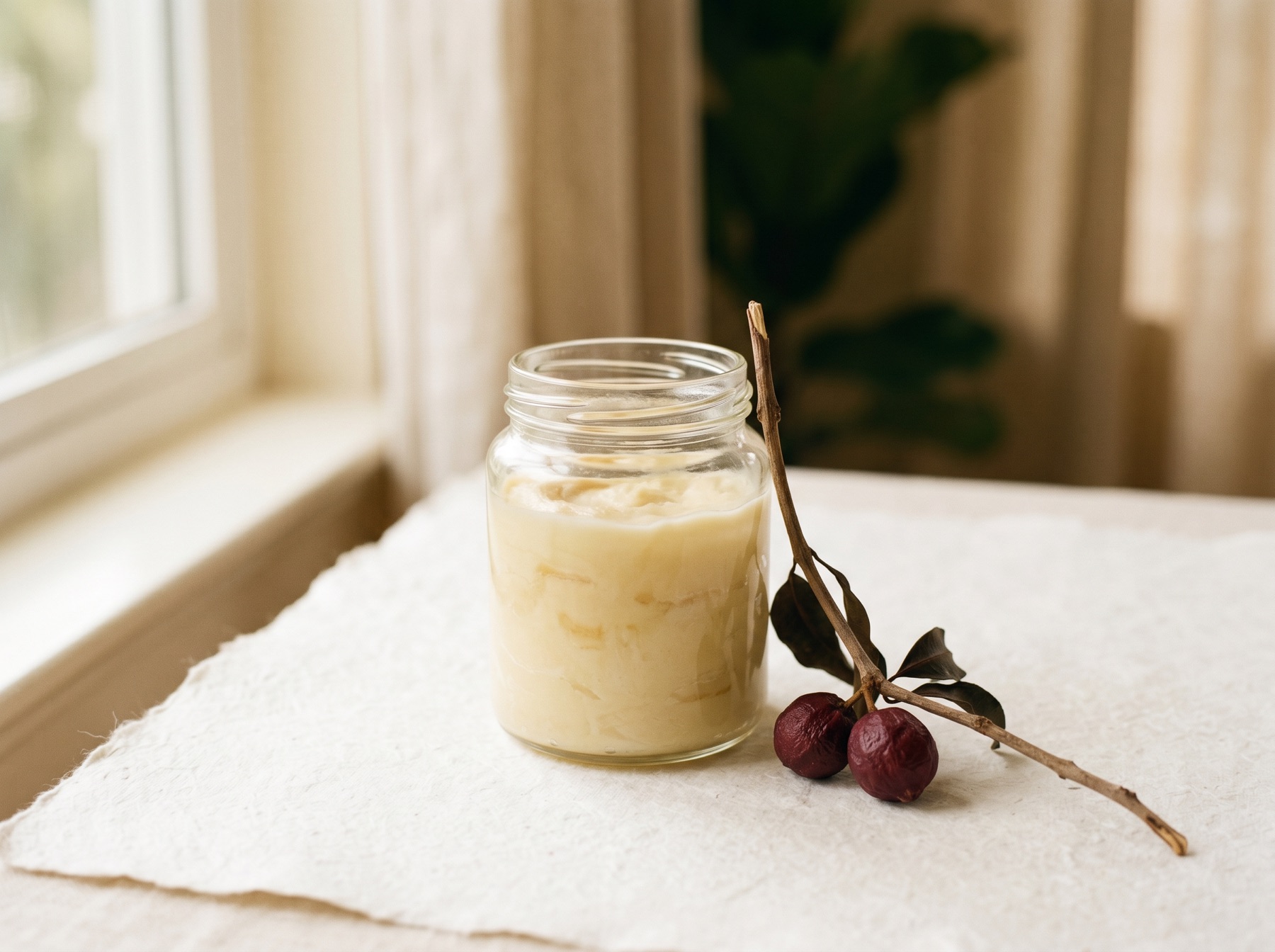
Pressed from the kernel of the kokum fruit — a small, crimson cousin of mangosteen that ripens across a 47-day window each May. The butter emerges cream-coloured, faintly sweet, and structurally peculiar: it is among the hardest of all natural butters, yet dissolves at skin temperature with a clean afterfeel that ages beautifully in an emulsion.
Kokum is our anchor butter, and the reason the company exists. Sindhudurg district, where we source, is the only place on earth where the tree grows commercially. Every year the forest produces roughly 40,000 metric tonnes of fruit — most of which is dried for kitchen use. The kernel, hidden inside the dark-red flesh, is frequently discarded. We buy those kernels from the same co-operatives our grandparents bought salt from.
Laboratory work tells us what the skin already knows. Stearic acid hovers above seventy percent. Oleic acid sits just below twenty. The melt point is locked between 37 and 40°C — exactly body temperature. Iodine values land between 33 and 40, making the butter remarkably oxidation-resistant compared with softer lipids. And comedogenicity, measured against the standard panel, returns a value that rounds cleanly to zero.
A butter that does not ask to be noticed, but changes every texture it touches.
Formulators use it three ways. As an emollient at 3 to 8 percent, it replaces some of the heavier shea in a balm without losing payoff. As a structural booster at 10 to 15 percent in stick formats, it holds shape through Indian summers without palm wax. And at high loads in treatment balms — 20 percent plus — it does something softer butters cannot: it crystallises in stable β-prime form, giving a velvety snap that consumers interpret as expensive.
| Fatty acid | Notation | Typical range |
|---|---|---|
| Stearic | C18:0 | 70–75% |
| Oleic | C18:1 | 15–20% |
| Palmitic | C16:0 | 2–5% |
| Linoleic | C18:2 | 1–2% |
| Other | — | <3% |
Recommended applications by our technical desk. For co-development work, we dispatch a formulator onto site for the first production batch.
Firm structure, near-neutral taste, holds shape at 35°C.
Lathers cleanly when paired with SCI or sodium cocoyl isethionate.
β-prime crystallisation yields a dry, non-greasy afterfeel.
Replaces 20–40% of shea to lighten the final texture.
Non-staining, high pigment loading, minimal drag.
Close to cocoa butter in thermal profile, without cocoa constraint.
Replaces shea at 1:1 for reduced tack. Replaces cocoa butter in CBE applications at 10–25% in blends with sal stearin. Never substitute with palm stearin — the crystal memory is wrong.
Complimentary for qualified formulators. Dispatched with CoA, lot number, and suggested inclusion windows — no commitment required.
Upcycled
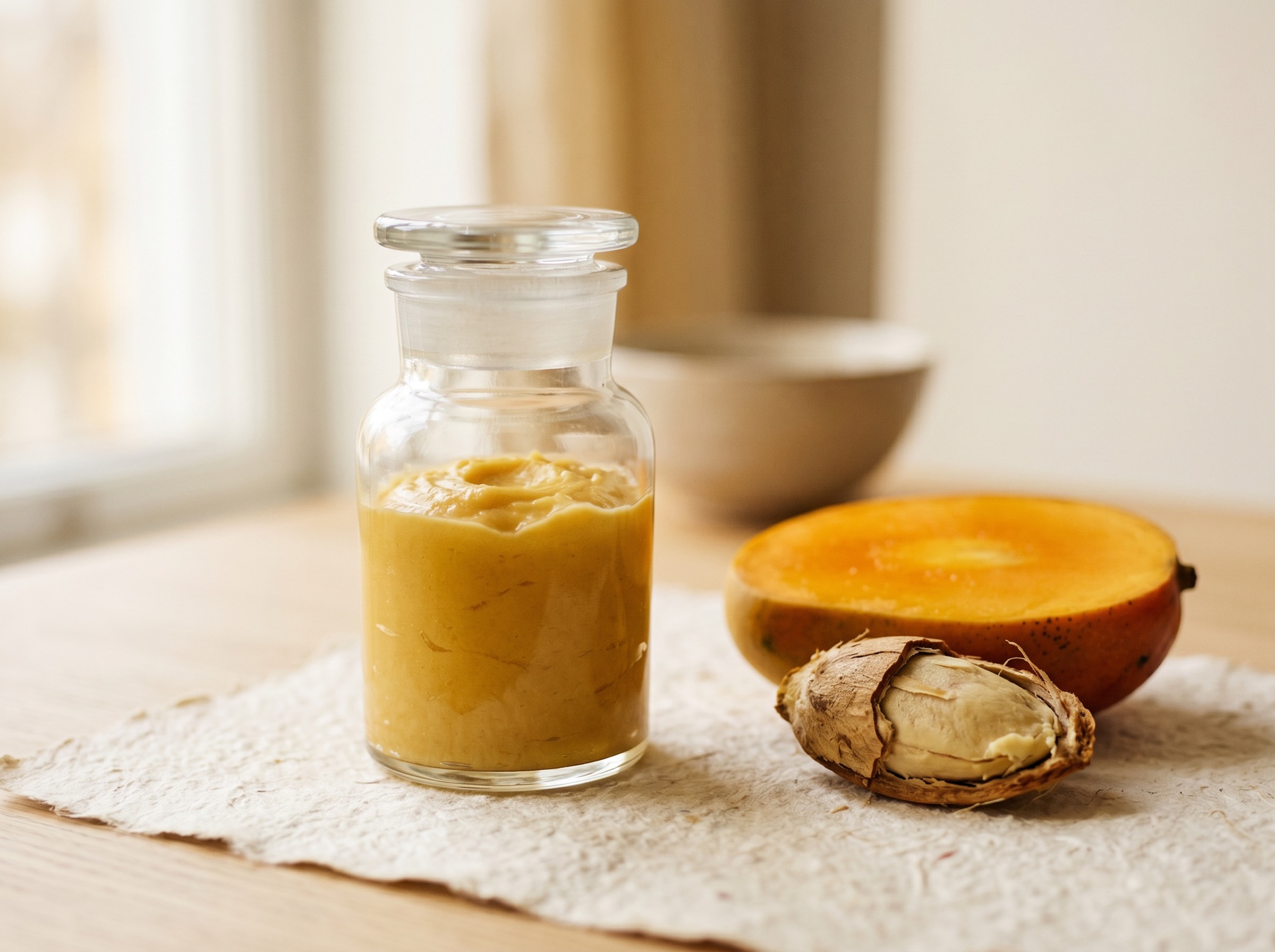
Mangifera indica
Balanced oleic–stearic profile. Pressed from kernels that would otherwise be burned.
Read dossier →
Green grade
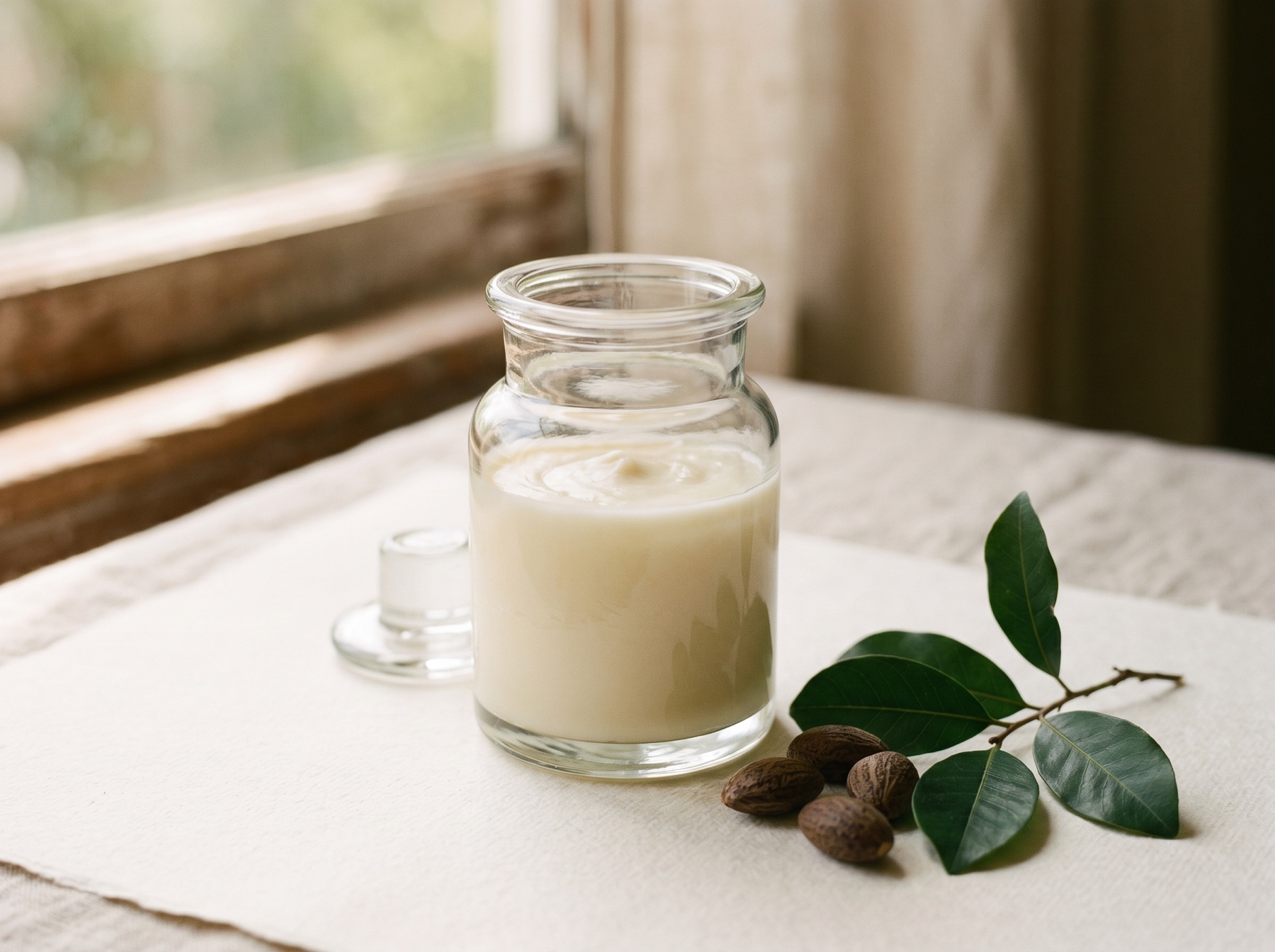
Shorea robusta
Firm, structured, unexpectedly elegant. Refined and green grades.
Read dossier →
FairWild
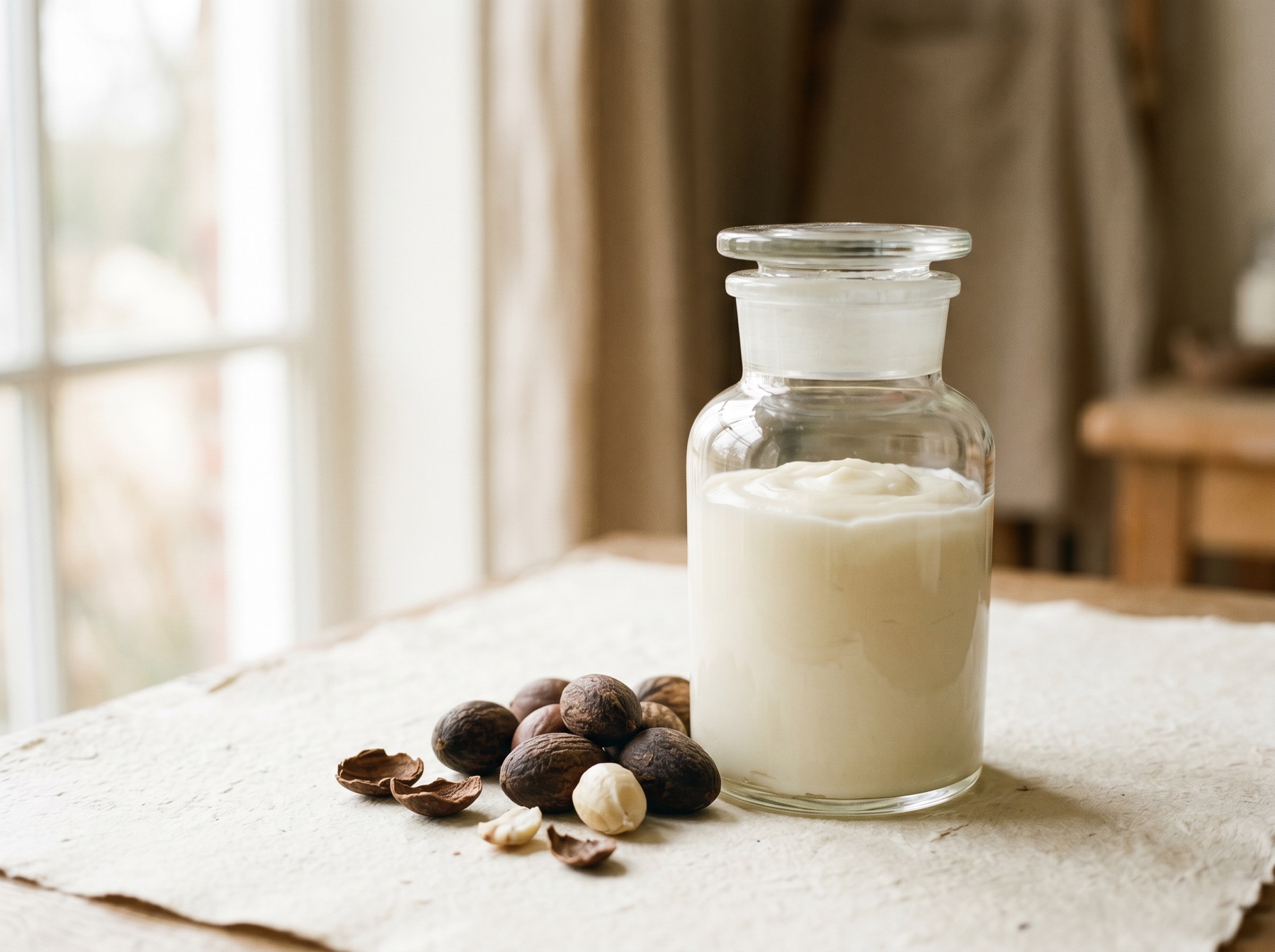
Vitellaria paradoxa
Burkina Faso and Ghana co-operatives. FairWild-certified.
Read dossier →The butter that makes shea feel heavy.
From Konkan with love.