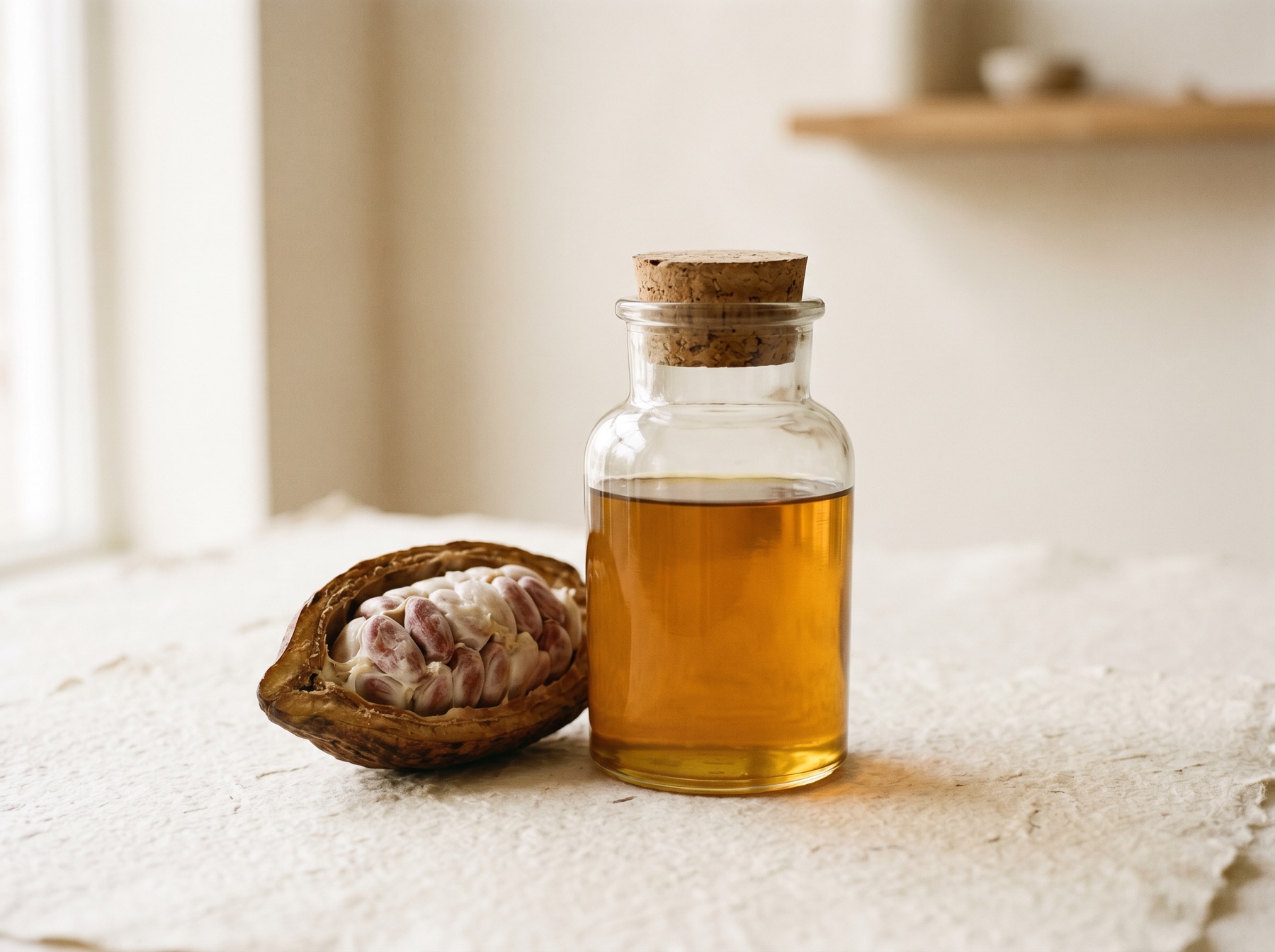
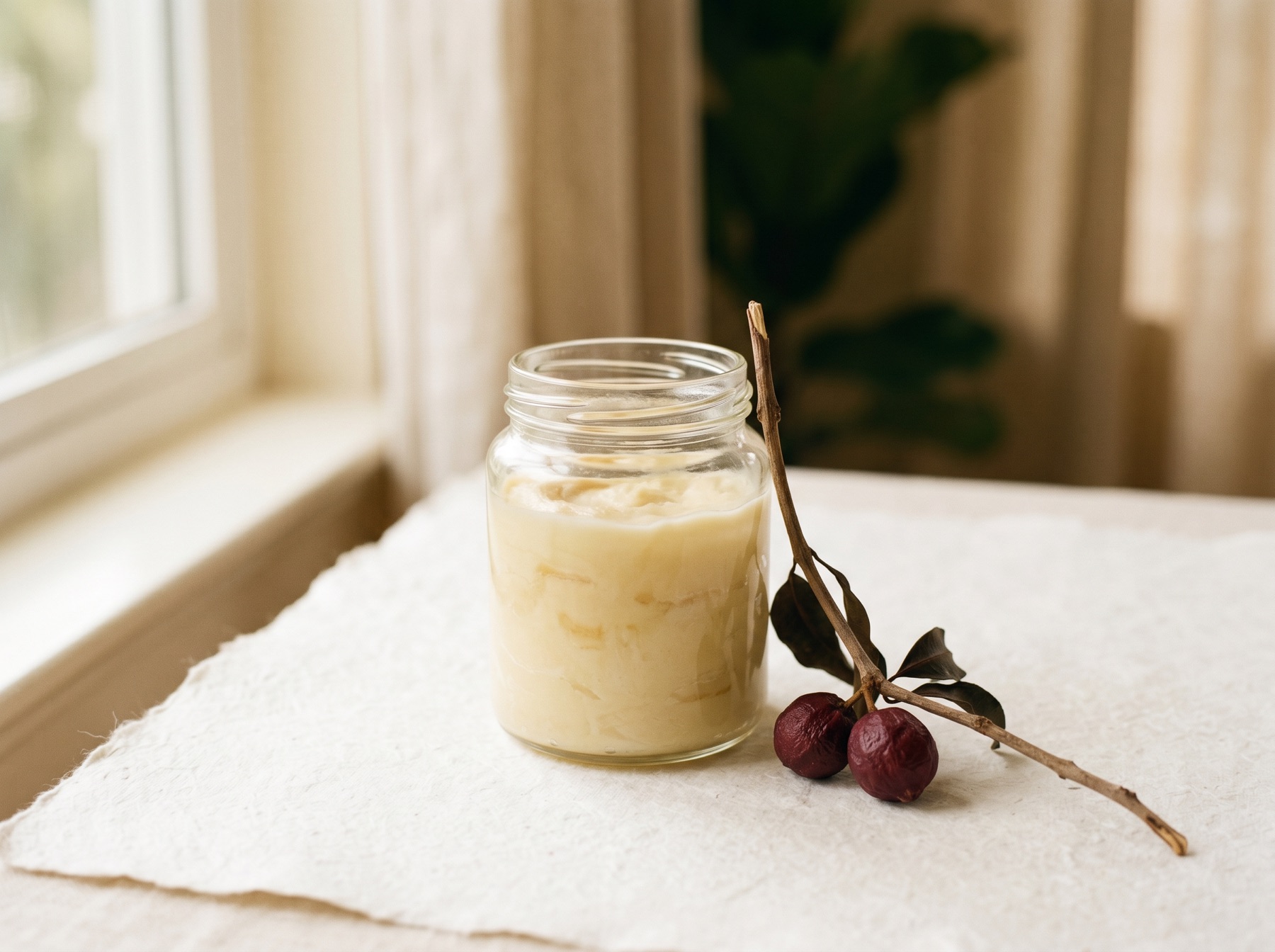
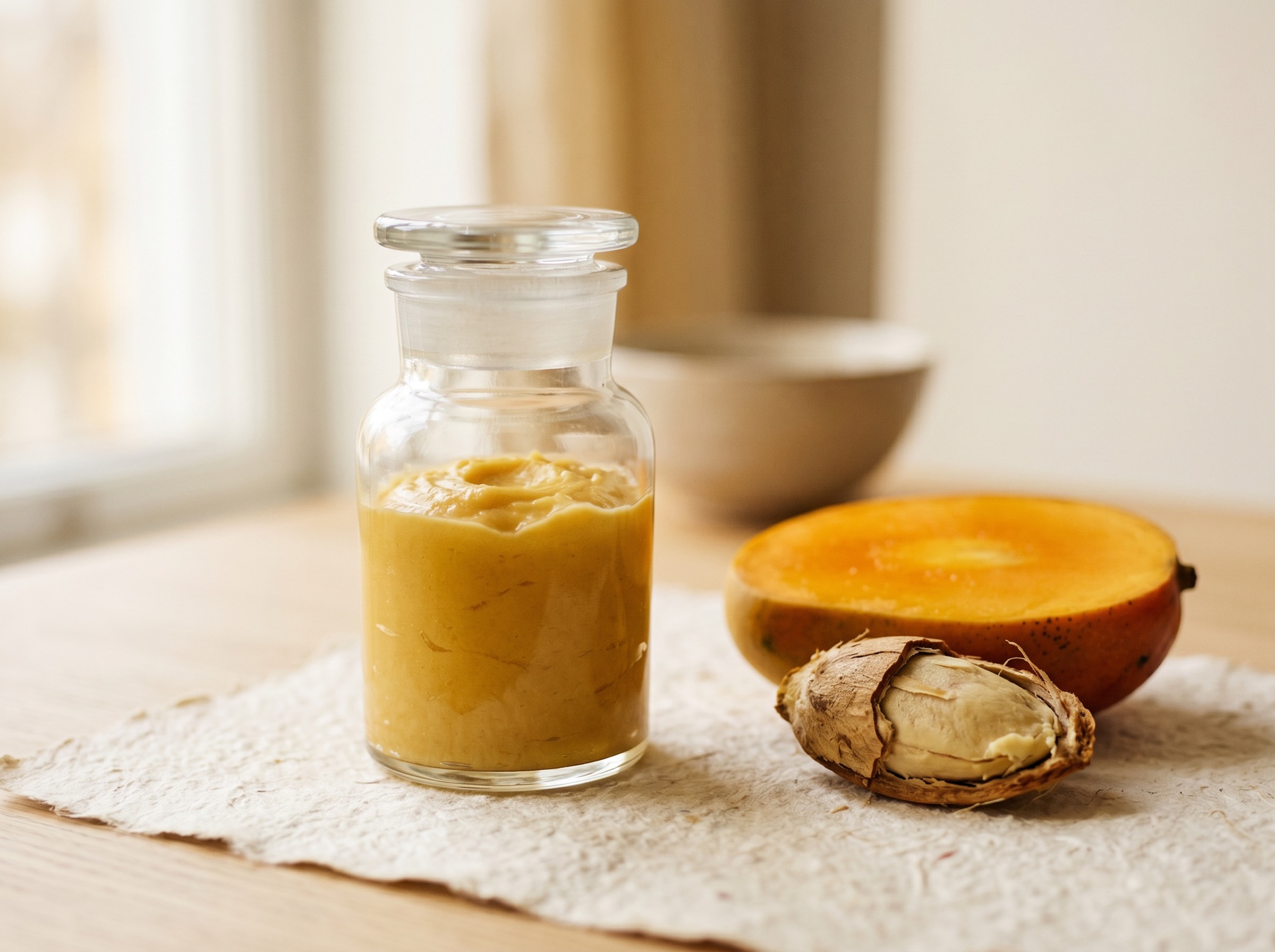
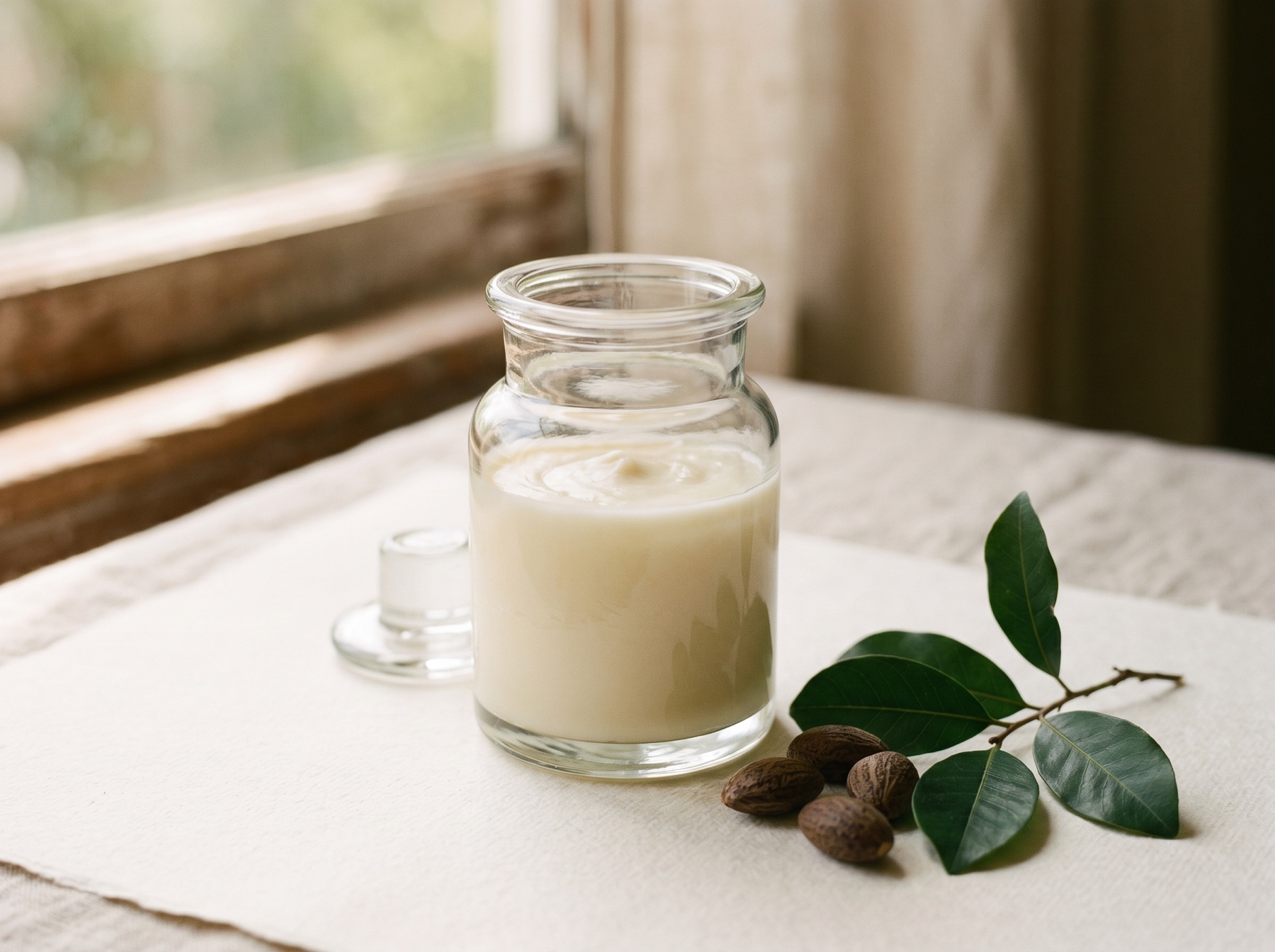
Cocoa Butter Equivalent — editorial still life
Dossier N° 05 · Blended in Konkan, from Indian-sourced lipids

Cocoa Butter Equivalent

Sal-stearin & kokum blend

The cocoa butter equivalent market is worth $1.41B in 2026, growing at a 5.24% CAGR through 2030. Almost every commercial CBE on the market is built on palm stearin. Ours is not. We fractionate sal stearin and blend it with kokum — two Indian lipids — to produce a CBE with cocoa's thermal profile and none of the deforestation debt. Shipped in two grades: cosmetic under BIS discipline, food under FSSAI discipline, from one plant with segregated fractionation.

N° 01
The grove & the press

What this butter actually is.

Cocoa butter is expensive and volatile. London ICE futures for cocoa crossed £8,400 per tonne in early 2026, up 340 percent over two years. Every confectioner and — increasingly — every cosmetic brand is shopping for alternatives. The industry answer for fifty years has been palm-stearin-based CBE, fractionated and blended to mimic cocoa butter's solid-fat content curve.

Palm, however, is no longer a clean story. EUDR compliance costs, NGO pressure, and consumer backlash have made palm-free positioning a commercial lever rather than a moral one. We believe the path forward is regional. Sal grows across 200,000 square kilometres of central India. Kokum grows exclusively on our coast. Between them, we have the fatty-acid profile and the thermal behaviour to match cocoa butter closely enough for most formulation purposes.

The only CBE on our side of the industry with zero palm and zero cocoa.

Our CBE ships in two grades from one plant. The cosmetic-grade line serves formulators under BIS IS 4707 and ISO 22716 discipline. The food-grade line serves chocolatiers under FSSAI Central Licence discipline, with HACCP plan, validated allergen-controlled changeover, and a segregated food-contact fill line. FSSAI filing is scheduled for Q3 2026; first food-grade commercial dispatch, December 2026. Cosmetic-grade pilot is live now.

N° 02
Specifications

The numbers behind every kilogram.

Technical specifications

Reference sheet · Lot-to-lot

Melt point
33–35 °C
SAP value
188–198 mg KOH/g
Iodine value
32–40
Sal stearin
60–70 %
Kokum
25–35 %
Status
Pilot Q3 2026
MOQ
200 kg

Fatty acid signature

Fatty acidNotationTypical range
StearicC18:050–58%
OleicC18:128–35%
ArachidicC20:05–9%
PalmiticC16:04–7%
LinoleicC18:21–3%
N° 03
Formulation uses

Where it earns its keep.

Recommended applications by our technical desk. For co-development work, we dispatch a formulator onto site for the first production batch.

Bean-to-bar chocolate food-grade

Direct substitute for cocoa butter at up to 5% inclusion under EU directive, higher under Indian FSSR. Single-origin story chocolatiers can print on the wrapper.

Confectionery CBE food-grade

Replacement for imported palm-based CBE. Thermal profile matches cocoa butter; solid-fat curve qualifies for tempering.

Pharmaceutical suppositories food-grade

Matches cocoa butter thermal profile; improved shelf life; BP / IP-compatible on specification.

Cosmetic lipstick bullets cosmetic

Snap and gloss of cocoa, without cocoa price volatility.

Chocolate-adjacent skincare cosmetic

Face masks, body butters marketed on cocoa story; full traceability to Indian lipid sources.

Cosmetic foundation sticks cosmetic

Structural lipid for stick foundations and prestige colour cosmetics.

Substitution guidance

Drop-in replacement for palm-based CBE. Requires pilot-scale qualification — we provide formulation support during onboarding.

N° 04
Food-grade track

For chocolatiers, under FSSAI discipline.

The same fractionated lipid, produced to a different discipline. Our food-grade CBE is the first kokum-anchored CBE built from ground up for Indian confectionery supply. Here is what that means in practice.

Food-grade CBE is not cosmetic-grade CBE in a different bucket. It is a separate regulatory universe. Our plant runs a segregated food-contact line from crude oil onward: SS 316L tanks, short-path deodoriser, food-grade blender with CIP, automated filler with metal detection and checkweigher. Packaging is food-contact HDPE liner in 25 kg blocks or MS drum, tamper-sealed, batch-traceable.

Licensing milestones: FSSAI Central Licence filing Q3 2026 (Fats & Oils category, Central tier, 2+ MT/day manufacturing capacity). HACCP plan in parallel, covering four critical control points: cold-press temperature, deodorisation temperature-time window, metal detection at fill, and pre-shipment retained sample. First commercial food-grade dispatch planned December 2026. FSSC 22000 targeted Y3. Halal and Kosher on trigger from mass-confectionery onboarding.

Our CBE is the only one on our side of the industry with zero palm and zero cocoa. It should also be the only one with a single-origin story a bean-to-bar chocolatier can print on the wrapper.

Allergen posture: this facility is peanut-free. Tree-nut-free beyond our named sources (kokum, mango kernel, sal, mahua, dhupa, shea). Soy-free. Sesame-free. Gluten-free. Dairy-free. Egg-free. Every raw material supplier signs an allergen declaration at onboarding. Full policy →

Early sampling for chocolatiers: the food-grade sample programme opens on FSSAI provisional receipt. Craft and bean-to-bar houses interested in pilot batch co-development can register interest now; we will notify on the first food-grade dispatch window.

Sample programme

Start with 50g of Cocoa Butter Equivalent.

Complimentary for qualified formulators. Dispatched with CoA, lot number, and suggested inclusion windows — no commitment required.

Request the sample
N° 05
Also from the shelf

Three more dossiers.

Our answer to a $141B market.

From Konkan with love.